What is visceral fat, and how do I reduce it?
Written by:
-4.png&w=3840&q=75)
24 Apr 2026 • 17 min read
Reviewed and fact-checked:

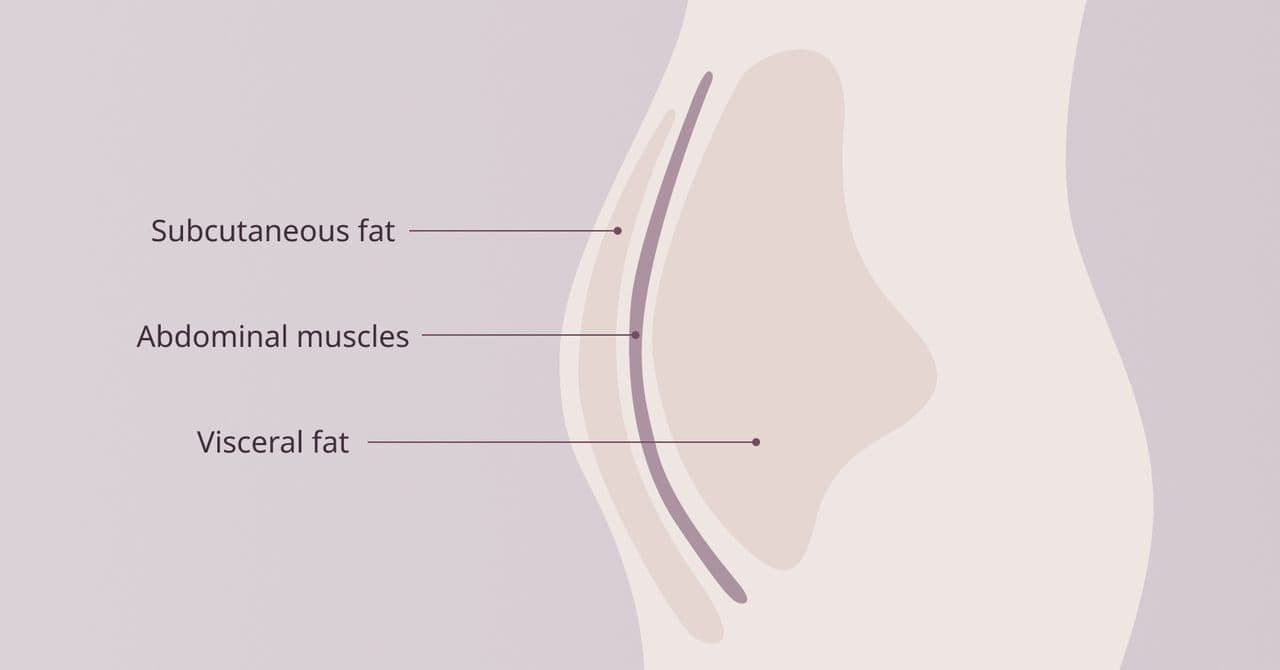
Visceral fat is a type of body fat stored deep within your abdomen that wraps around organs like the liver and pancreas.
Having too much visceral fat releases chemicals that increase the risk of high blood pressure, diabetes, heart disease, and stroke, so reducing it's vital for overall health.
We explain what visceral fat is, why it develops, what it means for your health, and the steps you can take to control it.
Key points
- Visceral fat can increase your risk of cardiovascular complications, diabetes, and cancer.
- Healthy visceral fat levels are determined by your waist-to-height ratio, age and sex.
- Sustainable weight loss, including more physical activity and a healthier diet, can help reduce your visceral fat.
What is visceral fat?
Visceral fat is stored around organs in the abdomen. You might think of the ‘pinchable’ fat under your skin, but visceral fat is hidden from view below the surface. It’s far more dangerous because it releases hormones and inflammatory chemicals.
Everyone has some visceral fat, as it helps keep organs from rubbing against each other. But too much visceral fat can cause harm over time. And while it’s reversible, if you don't take the right steps at the right time, your risk of health problems goes up.
Why is visceral fat dangerous?
The hormone changes caused by visceral fat can affect your heart and blood vessels by:
- increasing levels of fat in your blood, known as cholesterol
- increasing your blood pressure
- making your body respond less to a hormone called insulin, which helps move glucose from the blood into your cells for energy, potentially leading to type 2 diabetes
Cardiovascular risks
The high cholesterol caused by too much visceral fat may mean that a fatty material called plaque or atheroma builds up on the walls of your arteries, which are the blood vessels that bring blood to the heart.
This can damage and block arteries, significantly increasing your risk of coronary heart disease, heart attack, and stroke.
Related health risks
Excess visceral fat can affect more than just heart health. It can also increase your risk of the following:
- Type 2 diabetes. Having too much visceral fat can increase your risk of type 2 diabetes, as it affects how your body responds to insulin.
- Non-Alcoholic Fatty Liver Disease (NAFLD). When visceral fat builds up in the liver, it can cause scarring and inflammation. Without treatment, this can increase the risk of liver cancer.
- Different cancers. Having extra visceral fat increases inflammation and hormone changes that can damage cells over time, raising the risk of cancer. Visceral fat buildup has been linked to 13 types of cancer, including breast and colorectal cancer.
Having high blood pressure, high blood cholesterol, and a reduced response to insulin (insulin resistance) is known as metabolic syndrome. This can make type 2 diabetes and heart disease more likely.
Along with insulin, excess visceral fat can also affect how the following hormones work:
Growth hormones: visceral fat is associated with lower levels of growth hormones, which are crucial in fat-burning and maintaining muscle mass.
Sex hormones: visceral fat converts testosterone into oestrogen, which can lead to hormone imbalances.
Hunger hormones: visceral fat can affect how your body responds to leptin, which means your brain no longer gets a proper signal to let it know that you’re full.
What causes visceral fat?
A combination of lifestyle, medical, genetic, and hormonal factors contribute to the build-up of visceral fat.
Often, excess visceral fat results from regularly consuming more calories than your body uses. It’s especially likely if you eat a lot of high-fat, high-sugar foods and do not do much physical activity to burn them off. The body stores unused calories as fat.
You can also inherit genes from your parents or grandparents that affect how your body stores fat and converts food into energy. Your genes can also affect your lifestyle choices. Both of these factors can affect your visceral fat build-up.
Hormonal imbalances and certain medical conditions can also play a role, including:
- diabetes
- hormone imbalances
- fat tissue disorders
- circulatory system diseases
- medication side effects
How diabetes causes visceral fat
Diabetes means you have consistently raised blood sugar levels, which can result from insulin resistance.
In some people, insulin resistance means the body has to produce more insulin to have an impact on blood sugar. High insulin levels can increase fat storage around the organs in your belly.
How hormone imbalances cause visceral fat
The thyroid is a gland in the front of the neck that produces energy-burning hormones.
People with hypothyroidism do not produce enough thyroid hormones, which slows down their metabolism, making the body more likely to store excess fat.
Cushing’s syndrome is another hormonal problem linked to weight and visceral fat buildup. People with Cushing’s syndrome have high levels of steroid hormones in the body, which can cause weight gain.
How fat tissue disorders cause visceral fat
Fat tissue disorders can cause visceral fat by disrupting how your body stores fat, leading to more fat being stored around your organs instead of under the skin.
Also known as lipodystrophies, these conditions affect how and where the body stores and loses fat. Many are inherited, and some types lead to a loss of fat under the skin, which can trigger the body to store more fat internally as visceral fat.
How circulatory system diseases cause visceral fat
Circulatory system diseases can cause visceral fat by reducing physical activity and changing how fat is stored in the body.
Conditions that affect blood flow, like peripheral artery disease (PAD) and heart failure, can make movement difficult or exhausting. This can lower activity levels, which is key for reducing visceral fat.
Some medications, including beta-blockers, may also contribute to weight gain. In addition, poor blood flow can reduce oxygen to fat tissue, causing it to function abnormally and increasing the likelihood of fat being stored around the organs as visceral fat.
How medication side effects cause visceral fat
Some medications can cause visceral fat by increasing appetite, slowing metabolism, or changing how your body stores fat.
Medications like steroids, epilepsy treatments, diabetes medicines, antidepressants, and antipsychotics can lead to weight gain as a side effect. In some cases, this weight gain is more likely to be stored as visceral fat around the organs.
What are healthy visceral fat levels?
Healthy visceral fat levels are typically indicated by a waist-to-height ratio below 0.5, meaning your waist should be less than half your height.
As a guide:
- 0.4–0.49 is considered healthy
- 0.5–0.59 indicates increased risk
- 0.6 or higher is high
Some smart scales also estimate visceral fat, where a score of 1–12 is considered healthy.
While scans like CT or MRI are the most accurate, these simple measurements are commonly used in practice.
Visceral fat range in women
A healthy female waist circumference is less than 80 cm.
The risk of health problems in females increases with a waist circumference over 80 cm and is much higher with a waist circumference over 88 cm.
Body composition
According to a landmark Royal College of Nursing study, a healthy body fat range for females is 21 to 33%.
However, this varies by age.
Age
Below are the body fat ranges for a healthy female body according to age:
| Age group | Healthy body fat range |
|---|---|
| 20-39 years | 21% - 33% |
| 40-59 years | 23% - 34% |
| 60-79 years | 24% - 36% |
Visceral fat range in men
The World Health Organisation (WHO) suggests that a healthy waist circumference for males is less than 94 cm.
A male waist circumference of more than 94 cm suggests an increased risk of health problems related to visceral fat. The risk is significantly higher with a waist circumference over 102 cm.
In African Caribbean, Chinese, Japanese, and South Asian populations, risk is higher at a waist circumference of 90 cm.
Body composition
Men naturally carry less body fat than women to maintain healthy hormones and metabolism. This shows in the lower healthy body fat range for males of 20 to 39%.
Again, this range varies by age, as muscle mass generally reduces over time.
Age
Here are the healthy male body fat ranges for different age brackets:
| Age group | Healthy body fat range |
|---|---|
| 20-39 years | 8% - 20% |
| 40-59 years | 11% - 22% |
| 60-79 years | 13% - 25% |
How to reduce visceral fat
“You can only lose visceral fat by burning fat all over your body. This involves getting more active and eating healthy foods.
“Visceral fat might seem worrying, but you can take control of how much you have by managing your weight. And you can start by making small, sustainable changes today.”
Niya Mansuri, weight loss expert at myBMI
Exercise
Different types of exercise target fat in different ways. If you’re new to exercise, the best type is the one you enjoy, can build up slowly, and have time for. Any movement is going to help.
Here are different types of exercise you can try to burn belly fat while mixing up your routine.
Cardio
Also known as aerobic exercise, cardio is any activity that leaves you breathless and makes your heart work harder. It's the best type of exercise for burning visceral fat.
Walking, jogging, swimming, cycling, dancing, playing football with your mates, or even intensive housework like gardening can count as cardio.
Overall, it’s best to think less about whether a particular exercise is burning belly fat and more about whether it’s affecting your overall fat levels. This way, you’re improving your heart and lung health while working off fat from all over, including belly fat.
You should aim to try to get at least 150 minutes of moderate-intensity cardio or more than 75 minutes of high-intensity cardio per week.
Strength
Strength training is any movement that involves a weight that resists you, whether you are pushing or pulling. This type of exercise can help you build muscle, which means you burn more calories even while your body is at rest.
Many people think you can target belly fat by working on your core muscles, like with sit-ups. This is not the case. Though it will strengthen the muscles in your abdomen, you cannot target specific areas of fat by exercising only that body part.
Strength training can also support other training. For example, strengthening your legs with squats or deadlifts can give you more power for cycling or running, so you can run or cycle farther or faster, helping you burn more calories.
High-intensity interval training (HIIT)
This type of training involves bursts of intense activity like running, cycling, or swimming with short rests in between. Research has found that HIIT significantly reduces levels of fat across the whole body.
HIIT training is great if you have a busy schedule, as it achieves a lot in relatively little time. A HIIT routine can be a great way to work fat-burning into your day.
Dietary changes
A good diet is the backbone of fat-burning.
Planning your meals and making a few simple swaps can help you manage portion control and prioritise foods that support fat loss.
Increase fibre
High-fibre foods can help you feel full and keep your blood sugar levels stable.
Swapping refined carbs for wholegrain products like brown rice, wholemeal pasta, or wholemeal bread and choosing high-fibre vegetables like beans, peas, lentils, broccoli, Brussels sprouts and skin-on potatoes can help you increase your fibre intake.
Choose healthy fats
Not all fats are equal, and we need some healthy fats to absorb certain vitamins. Replace foods high in saturated fats with those that have more unsaturated fats like nuts, avocados, and oily fish. This can help you feel full and keep your cholesterol levels under control.
Bear in mind that many good sources of healthy fats are also high in calories, so keep an eye on portion control.
Limit sugar
Sugary snacks and drinks are a source of excess calories which can be stored as visceral fat. The occasional treat is fine, but if these feature heavily in your daily diet, swap them for lower-sugar options.
Lifestyle improvements
Making small daily changes to your lifestyle can have a big impact on visceral fat over time.
Be more active
The more you move, the more calories you use, which can reduce visceral fat over time.
Reduce the amount of time you spend sitting down every day. If you can, get up from your desk for five minutes every hour. You can even integrate movement into TV time by marching on the spot while catching up on your favourite show.
Improve sleep quality
Your sleep schedule matters for weight management. The amount of sleep you get can affect the hormones that control your hunger, so a poor night’s sleep can change your hunger and fullness cues the next day.
Keeping a regular sleep schedule and getting enough sleep is vital for having the energy to move around during the day and make healthy food choices. Try going to bed and getting up at the same time every day to help improve your sleep quality.
Manage stress levels
Using stress management techniques, like meditation, exercise, deep breathing, yoga, or simply distracting yourself with something you enjoy or talking to loved ones, can help you reduce your weight and visceral fat.
Stress causes higher levels of a hormone called cortisol, which can increase your appetite and make controlling your diet harder. Some people also struggle with stress eating, which means they eat to feel better after a tough day rather than when they’re hungry.
Taking steps to manage stress can help you focus on your weight management journey.
Limit alcohol and nicotine
Alcohol is high in ‘empty’ calories, meaning calories that do not add any nutrition to your body. Over time, this can add to your visceral fat. If you enjoy a tipple, stick to the NHS-recommended limit of 14 units a week.
Smoking can also increase your waist circumference over time. Quitting smoking is a tough journey, but one that has a whole range of incredible health benefits.
If you want to stop drinking or smoking but are finding it hard, speak to your GP about your options. Apps, support groups, and counselling are available to lend a helping hand on your path to a smoke- and drink-free life.
Frequently asked questions
Can you be at a healthy weight and still have high visceral fat?
Yes, you can still have a normal body mass index (BMI) and have high visceral fat. Having excess visceral fat increases your risk of health issues even if you’re at a healthy weight.
How quickly does visceral fat respond to lifestyle changes?
Everybody’s different, and how quickly visceral fat burns will depend on various factors like your starting visceral fat level, genetics, and which lifestyle changes you’re making.
Is visceral fat harder to lose than other fat?
All fat responds to lifestyle changes like a healthy diet and moving more – you cannot target one type. Overall, weight loss is the best way to target all types of fat in one go.
Can visceral fat increase even if my weight stays the same?
Yes. Factors like stress, smoking, and poor sleep can push your visceral fat levels up even if you’re not carrying more weight. Muscle weighs more than fat, so you might lose muscle and gain fat without seeing the number on the scale change.
Do weight loss medications reduce visceral fat specifically?
No, weight loss medications don’t specifically reduce visceral fat, but do give you the tools to reduce fat all over your body, in turn helping you reduce your visceral fat levels.
How accurate are smart scales at measuring visceral fat?
The most accurate way to measure visceral fat is with an MRI or CT scan. However, if you’re trying to gauge your visceral fat level, a smart scale can help. Measuring your waist-to-height ratio is also useful.
Does menopause increase visceral fat risk?
Yes. As your oestrogen levels drop during and after menopause, your fat storage moves from the hips and thighs to the abdomen.
Is waist measurement a reliable indicator of visceral fat?
Yes. Doctors will measure your waist circumference to work out your waist-to-height ratio. This measurement features in clinical guidelines as a useful and accurate measurement of visceral fat.
Summary
“Visceral fat is stored deep within the abdomen, wrapping around vital organs. Unlike ‘pinchable’ fat, this hidden layer acts like an organ, releasing chemicals that increase your risk of diabetes, heart disease, cancer, and other health problems.
“You can take control of your visceral fat levels through consistent lifestyle changes that support weight loss. Prioritising movement, increasing fibre and healthy fat intake, reducing sugary foods, and managing stress and sleep are sustainable steps to safely reduce fat levels and improve your metabolic health.”
Niya Mansuri, weight loss expert at myBMI
Sources
- Adipose tissue dysfunction and lipotoxicity. (n.d.). UK Research and Innovation. [Accessed on February 11, 2026]
- Alcohol units. (2024). NHS. [Accessed on February 11, 2026]
- Belly fat and your heart. (2025). Heart UK. [Accessed on February 11, 2026]
- Body measuring techniques. (2023). East Lancashire Hospitals NHS Trust. [Accessed on February 11, 2026]
- Effect of High-Intensity Interval Training on Total, Abdominal and Visceral Fat Mass: A Meta-Analysis. (2018). Sports Medicine. [Accessed on February 11, 2026]
- Female obesity: Association with endocrine disruption and reproductive dysfunction. (2021). Obesity Medicine. [Accessed on February 11, 2026]
- Fibre content of Fruits & Vegetables. (n.d.). NHS. [Accessed on February 11, 2026]
- Healthier Lifestyle Choices. (n.d.). NHS. [Accessed on February 11, 2026]
- Healthy percentage body fat ranges: an approach for developing guidelines based on body mass index. (2000). The American Journal of Clinical Nutrition. [Accessed on February 11, 2026]
- Heart failure. (2025). British Heart Foundation. [Accessed on February 11, 2026]
- How to prepare your weighing scales for accurate use. (n.d.). NHS. [Accessed on February 11, 2026]
- How does obesity cause cancer? (2024). Cancer Research UK. [Accessed on February 11, 2026]
- Lipodystrophy. (2023). NHS. [Accessed on February 11, 2026]
- MASLD (Metabolic Dysfunction-Associated Steatotic Liver Disease). (2024). Bradford Teaching Hospitals NHS Foundation Trust. [Accessed on February 11, 2026]
- Menopause: Nutrition and Weight Gain. (n.d.). British Menopause Society. [Accessed on February 11, 2026]
- Metabolic syndrome. (2022). NHS 111 Wales. [Accessed on February 11, 2026]
- Obesity. (2025). British Heart Foundation. [Accessed on February 11, 2026]
- Obesity causes. (2023). NHS. [Accessed on February 11, 2026]
- Obesity: identification, assessment and management (Clinical Guideline CG43). (2022). National Institute for Health and Care Excellence (NICE). [Accessed on February 11, 2026]
- Overview: Peripheral arterial disease (PAD). (2023). NHS. [Accessed on February 11, 2026]
- Semaglutide for managing overweight and obesity (Technology appraisal guidance TA875). (2023). National Institute for Health and Care Excellence (NICE). [Accessed on February 11, 2026]
- Stress-induced overeating behaviors explained from a (transitory) relief-learning perspective. (2024). Physiology & Behavior. [Accessed on February 11, 2026]
- The paradox of obesity with normal weight; a cross-sectional study. (2023). Frontiers in Nutrition. [Accessed on February 11, 2026]
- Understanding your heart health. (n.d.). British Heart Foundation. [Accessed on February 11, 2026]
- Understanding your weight. (n.d.). British Heart Foundation (NHF). [Accessed on February 11, 2026]
- Visceral Fat - What is Visceral Fat and why is it Important? (n.d.). Tanita. [Accessed on February 11, 2026]
- Waist size and your heart. (2024). British Heart Foundation (BHF). [Accessed on February 11, 2026]
- Waist size: why it matters. (2024). Diabetes UK. [Accessed on February 11, 2026]
- Waist-to-height ratio: guide for adults. (2024). National Institute for Health and Care Excellence (NICE). [Accessed on February 11, 2026]
- Weight gain and menopause. (2023). British Menopause Society (Women’s Health Concern). [Accessed on February 11, 2026]
- Weight loss: food factsheet. (2024). British Dietetic Association (BDA). [Accessed on February 11, 2026]
- Your simple guide to healthy weight loss. (2021). East Sussex Healthcare NHS Trust. [Accessed on February 11, 2026]