Strength training during menopause: benefits, exercises, and tips
Written by:

30 Oct 2026 • 12 min read
Reviewed and fact-checked:

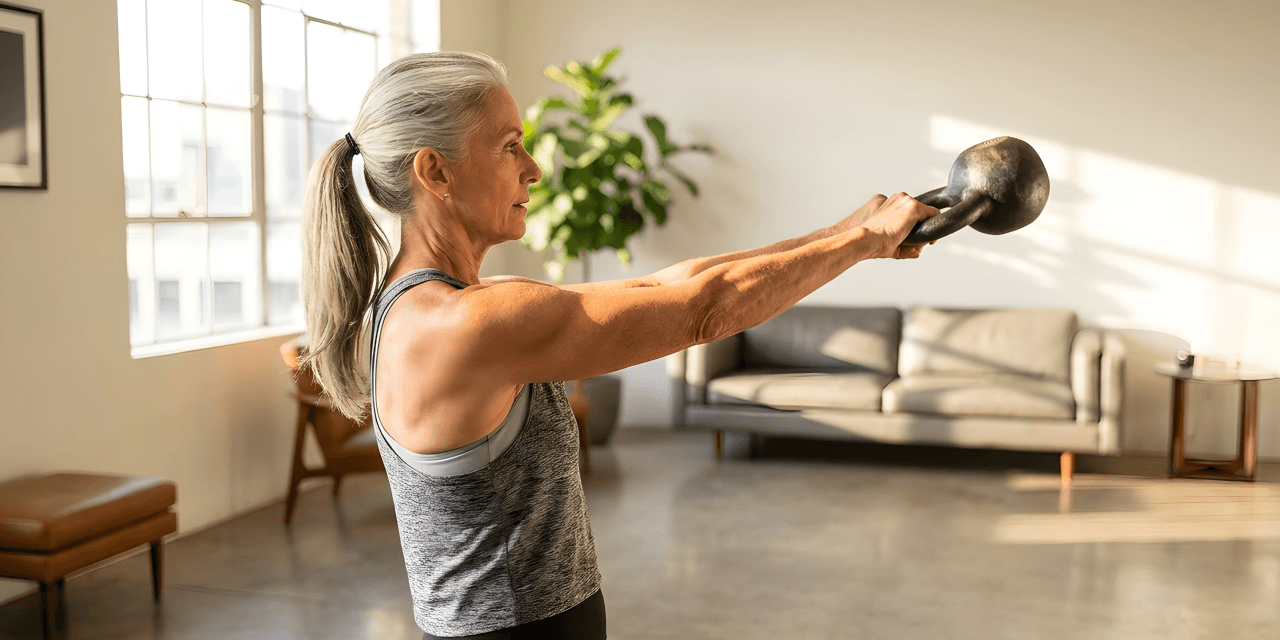
Menopause can bring a lot of frustrating changes to the body, from weight gain and muscle loss to lower energy levels and reduced fitness. While hormonal shifts can make it feel like your body is working against you, strength training is one of the most effective ways to take back control.
By helping to preserve muscle, support joint health, and increase the number of calories you burn at rest, strength training can play an important role in weight management and long-term wellbeing during menopause.
Strength training doesn't have to mean spending hours in the gym or lifting heavy weights. Whether you're exercising at home, using resistance bands, or lifting weights, there are plenty of ways to build strength that fit your everyday life.
In this guide, we'll explain why strength training is so beneficial during menopause, exercises you can try, and how to build a simple routine that works for you.
Why exercise helps with menopause
Some of the benefits of exercising during menopause are that it:
- helps support a healthy weight
- preserves muscle mass
- improves energy levels
- supports joint
- improves balance and mobility
- supports better sleep
- boosts mood and confidence
- reduces the risk of long-term health conditions such as heart disease
Menopause affects every woman differently, but many people experience symptoms such as weight gain, hot flushes, fatigue, low mood, sleep disturbances, and changes in body composition.
These changes are largely driven by declining oestrogen levels, which can influence everything from where your body stores fat to how much muscle you naturally maintain over time. Many women experience menopausal belly fat, which is caused by this shift in fat storage due to hormonal changes.
Of course, staying active won't stop menopause from happening, but it can make many of its effects more manageable.
Just as importantly, exercise can help you feel more like yourself.
Cardio activities such as walking, running, swimming, or cycling are the go-to for many women. And yes, these are excellent for cardiovascular health, but strength training offers some unique benefits that become particularly important during menopause.
Why muscle mass is key for menopausal women
Muscle mass is key for menopausal women because from our 30s onwards, we naturally begin to lose muscle over time, and during menopause, this process speeds up due to declining levels of oestrogen.
The amount of muscular tissue you have in your body is called muscle mass. One of the lesser-known effects of ageing is sarcopenia, a condition that causes a gradual loss of muscle mass, strength and physical function.
As muscle mass decreases, you may notice that everyday tasks feel more difficult, your strength declines, or your metabolism doesn't seem to work quite as efficiently as it once did.
Muscle tissue plays an important role in how well we can navigate through the world. It helps us:
- move efficiently (mobility)
- continue doing tasks with independence as we age
- support healthy joints
- improve balance and coordination
- reduce the risk of falls and injuries
- burn calories even when resting
- help support healthy blood sugar regulation
- reduce risk of developing type 2 diabetes
This is one reason why many women notice changes in their body composition during menopause, even if their weight remains relatively stable.
"Maintaining muscle as you age becomes less about aesthetics and more about protecting your health, mobility, and quality of life for years to come. The beauty of strength training is that it can help you feel stronger, more capable, and empowered both in and out of the gym."
Niya MansuriPrescribing Pharmacist
Benefits of strength training during menopause
As oestrogen levels decline during menopause, maintaining strength becomes increasingly important for supporting your physical health, mobility, and overall wellbeing.
How does strength training help?
Maintains muscle mass
Strength training provides your muscles with a reason to stay strong.
Regular resistance exercises can help slow age-related muscle loss and can even help you build new muscle. This is important because maintaining muscle supports movement, weight loss, independence, and healthy ageing.
Supports weight management and metabolic health
Muscle tissue uses more energy throughout the day than fat, so building muscle can help your body burn more calories throughout the day, even when you're resting.
During menopause, when hormonal changes can contribute to increased belly fat and changes in body composition, maintaining muscle mass becomes especially important.
Combined with a balanced diet and regular physical activity, strength training can support long-term weight management, metabolic health, and improved body composition.
Improves bone health
Bone density naturally declines after menopause, increasing the risk of osteoporosis and fractures. Weight-bearing and resistance exercises place healthy stress on bones, encouraging them to stay strong.
Improves balance and stability
Strong muscles help support your joints and improve balance, coordination, and stability. This can reduce the risk of falls as you get older.
Boosts confidence and wellbeing
Strength training isn't just beneficial physically. Exercise releases endorphins, and many women find that feeling stronger helps improve confidence, resilience, and overall mood.
Whether it's lifting a heavier weight, carrying your shopping more comfortably, or feeling more capable in everyday life, small wins can make a big difference.
Supports long-term health
Regular strength training has been linked to better heart health, improved blood sugar control, and ageing more comfortably. Think of it as an investment in your future self.
Strength training exercises to try during menopause
One of the best things about strength training is that it can work around you.
You don't need a gym membership or expensive equipment to get started. Bodyweight exercises, resistance bands, dumbbells, fitness classes, and gym machines can all help you build strength.
The key is finding activities you enjoy and can stick with consistently. Here are some exercises you can do with or without equipment.
Bodyweight exercises
Bodyweight exercises use your own body as resistance and are often a great place to start if you're new to exercise.
Examples:
- Squats
- Push-ups
- Lunges
- Step-ups
- Wall sits
- Bird-dog
These exercises help build functional strength, which is strength that carries over into everyday movements.
Dumbbell exercises
Dumbbells are versatile, accessible, and suitable for a range of fitness levels. You can do dumbbell exercises at the gym or at home.
Examples:
- Bicep curls
- Shoulder presses
- Goblet squats
- Romanian deadlifts
- Bent-over rows
- Chest presses
Starting with lighter weights and gradually progressing can help build confidence and reduce the risk of injury.
Kettlebell exercises
Kettlebells can help improve functional strength, balance, and coordination, making real-life movements like carrying shopping bags easier.
Examples include:
- Kettlebell deadlifts
- Goblet squats
- Farmer's carries
- Kettlebell swings (for more experienced exercisers)
Resistance band exercises
Resistance bands are affordable, portable, and ideal for home workouts. They're a great choice for beginners.
Try:
- Glute bridges
- Resistance band rows
- Lateral walks
- Banded squats
- Standing chest presses
They're also useful if you're returning to exercise and want a lower-impact option.
Weight machine exercises
Gym machines can feel more approachable when you're new to strength training, and they provide a controlled way to build strength and learn movement patterns safely.
Examples:
- Leg press
- Lat pulldown
- Seated row
- Chest press machine
- Leg curl machine
Yoga
Many people don't immediately think of yoga as strength training, but it does require you to use your bodyweight strength, and certain poses require significant muscular control and stability.
Yoga may help:
- improve balance
- build strength
- supports healthy bones
- increase flexibility
- reduce stress
Beneficial poses include:
- Chair pose
- Warrior I
- Warrior II
- Plank
- Bridge pose
Pilates
Pilates focuses on stability, posture, and control, but it can also build strength in the smaller muscles, especially during resistance-based classes.
Benefits may include:
- improved core strength
- better balance
- increased body awareness
- greater stability throughout daily activities
Example strength training routine for women in menopause
If you're new to strength training, remember that it's not about being perfect. Getting started and staying consistent is how you'll see real results.
This beginner-friendly routine can be completed at home or in the gym with a mixture of bodyweight and weighted exercises and takes around 20 to 30 minutes.
Warm-up (5 minutes)
Preparing your body before exercise gets your muscles warmed up and can help improve performance and reduce the risk of injury.
Warm-up routine:
- Marching on the spot for 1 minute
- Arm circles for 30 seconds in each direction
- Bodyweight squats x 10
- Hip circles for 30 seconds in each direction
- Forward leg swings x 10 each leg
Strength training workout
Complete 2 to 3 rounds of the following exercises.
Rest for 60 to 90 seconds between exercises if needed.
Squats (10-12 repetitions)
How to do a squat:
- Stand with your feet about shoulder-width apart, with your toes pointing slightly outwards.
- Brace your core and keep your chest lifted.
- Push your hips back and bend your knees as if you're sitting down into a chair.
- Lower as far as feels comfortable while keeping your heels on the floor.
- Press through your heels to return to standing.
Why it helps: Squats strengthen the thighs, glutes and core while supporting everyday movements such as sitting, standing and climbing stairs.
Shoulder press (10-12 repetitions)
How to do a shoulder press:
- Hold a dumbbell in each hand at shoulder height with your palms facing forwards.
- Stand tall and gently engage your core.
- Press the weights overhead until your arms are almost fully extended.
- Pause briefly at the top.
- Slowly lower the weights back to shoulder height with control.
Why it helps: Builds upper-body strength for lifting, carrying, and reaching overhead.
Dumbbell row (10-12 repetitions)
How to do a row:
- Stand tall with a dumbbell in each hand, holding them by your sides.
- Hinge forward slightly at your hips, keeping your back straight and core engaged.
- Pull the dumbbells up towards your ribs, driving your elbows back and keeping them close to your body.
- Pause briefly at the top of the movement and squeeze your shoulder blades together.
- Slowly lower the dumbbells back to the starting position with control.
Why it helps: Strengthens the muscles of the upper back and shoulders, helping support posture and everyday pulling movements.
Glute bridge (10-12 repetitions)
How to do a glute bridge:
- Lie on your back with your knees bent and feet flat on the floor, hip-width apart.
- Tighten your core and glutes.
- Push through your heels and lift your hips towards the ceiling.
- Pause briefly when your body forms a straight line from your shoulders to your knees.
- Lower your hips back down with control.
Why it helps: Strengthens the glutes, hamstrings and core while supporting balance and lower-body stability.
Modified push-ups (8-10 repetitions)
How to do a push-up:
- Start on your knees or place your hands against a wall for an easier variation.
- Position your hands slightly wider than shoulder-width apart.
- Bend your elbows and slowly lower your chest towards the floor or wall.
- Keep your body in a straight line from your head to your knees or heels.
- Push through your hands to return to the starting position.
Why it helps: Builds strength in the chest, shoulders, arms, and core.
Functional movement finisher (optional)
Functional exercises prepare your body for everyday activities and help maintain independence as you age.
Choose one:
- sit-to-stands from a chair x 10
- step-ups x 10 on each leg onto a step or bench
- carrying dumbbells or shopping bags for 30-60 seconds
- climbing stairs for 1-2 minutes
These movements may seem simple, but they mirror many of the activities we perform every day.
Cooldown (5 minutes)
Finish your workout with:
- slow walking for 2 minutes
- hamstring stretches
- calf stretches
- chest stretches
- deep breathing exercises
A cooldown can help your body transition back to a resting state and leave you feeling refreshed.
Things to remember when starting strength training
How often should you strength train?
You don't need to exercise every day to see results. Most adults should aim to strength train at least twice per week, but if you're new to exercise, even one session a week is a positive step forward.
Choose the right exercises and weights
Focus on exercises that target multiple muscle groups at once, called compound exercises. These movements are both time-efficient and highly functional, helping you build strength that carries over into everyday life.
Examples include:
- squats
- lunges
- deadlifts
- push-ups
- rows
Choose a weight or resistance level that feels challenging while still allowing you to maintain good technique throughout each set.
As you get stronger, you can gradually increase the challenge by adding more weight, performing more repetitions, or increasing the number of sets. This is known as progressive overload and is one of the key principles behind building strength and maintaining muscle over time.
Don't forget balance and mobility
Strength is important, but it's only one piece of the puzzle.
Adding activities such as:
- yoga
- pilates
- stretching
- balance exercises
can support mobility, flexibility, coordination, and fall prevention. A well-rounded exercise routine often delivers the greatest overall health benefits.
Make time for recovery
Rest is an essential part of progress. Your muscles need time to recover and adapt after exercise so recovery should be viewed as part of your training plan, not a break from it.
Recovery can look like:
- prioritising sleep
- staying hydrated
- eating enough protein
- scheduling rest days
- listening to your body
Remember, consistency beats perfection every time. A workout routine that you can maintain for months or years will be far more beneficial than an intense plan that feels impossible to stick to.
Stay stronger for longer
Menopause can bring changes to your body, but it can also be an opportunity to build healthy habits that support your long-term wellbeing.
The benefits of lifting weights can create huge changes to your lifestyle, confidence, and overall health during menopause. Giving you independence as you age, protecting your joints and muscles so that you feel more comfortable every day.
A couple of sessions a week, starting small, staying consistent, and focusing on progress rather than perfection. Every squat, step-up, resistance band exercise, or walk is an investment in a stronger, healthier future.
Sources
- Physical Activity Guidelines. (date unknown) HSE. [Accessed 26 October 2026]
- Every Move Counts: National Physical Activity and Sedentary Behaviour Guidelines for Ireland. (2025) Healthy Ireland.[Accessed 26 October 2026]
- Exercises for Osteoporosis. (2021)Irish Osteoporosis Society. [Accessed 26 October 2026]
- The Impact of the Menopausal Transition on Body Composition and Abdominal Fat Redistribution. (2026) PMC. [Accessed 26 October 2026]
- Osteoporosis / Bone Health. (2026) Pelvic Health Ireland. [Accessed 26 October 2026]
- Moving Through Menopause: How Exercise Supports Your Body and Mind. (2025) The Menopause Charity. [Accessed 26 October 2026]
- Lifestyle for Healthy Bones. (2022) The Menopause Charity.[Accessed 26 October 2026]