How should you eat when sleep is poor during menopause?
Written by:

16 Oct 2026 • 9 min read
Reviewed and fact-checked:


After a night of tossing, turning and night sweats, the last thing you want to think about is what to eat. And yet, that's often when food matters most. Poor sleep can leave you hungrier and more tired, and more likely to reach for sugary, starchy snacks. How well you eat on a tired day will depend on factors such as how much energy you have, what's already in your kitchen, how regular your meals are, and what's keeping you awake.
As a chef and nutrition coach, I know how hard it is to make good choices on little sleep. So, this isn't about perfect eating. In this guide, I explore why poor sleep affects your appetite, and share simple, realistic meal and snack ideas to help you get through the day.
Key points
- Poor sleep affects the hormones that control appetite, so feeling tired and ravenous is biology, not a lack of willpower
- A protein-rich breakfast and regular meals can help keep your energy steadier and your cravings in check
- Simple snacks that pair protein with fibre will keep you going for longer than a biscuit or a bar of chocolate
Why does poor sleep make you hungrier?
When you don't sleep well, the hormones that control your appetite get thrown off. Ghrelin, which makes you feel hungry, tends to go up, while leptin, which tells you you're full, tends to go down. You're also more likely to crave quick energy from sugary and starchy foods.
Menopause can make this worse, as night sweats, hot flushes, anxiety, and hormonal changes can all interrupt sleep. If you're tired and ravenous, it's not a lack of willpower. It's biology.
Why start the day with protein?
A good breakfast sets you up for steadier energy and fewer cravings. Even if you don't feel like eating first thing in the morning, try to have something with protein within a couple of hours of waking. Some easy options include:
- scrambled eggs on seeded toast, with a handful of spinach
- greek yoghurt with berries, seeds and a sprinkle of oats
- overnight oats made with milk and a spoonful of nut butter
- a smoothie with milk, banana, yoghurt and a scoop of protein powder
- cottage cheese on wholegrain toast with sliced tomato
What are some easy lunch and dinner ideas for tired days?
On days when cooking feels like too much, these ideas need very little effort:
- a jacket potato with baked beans and grated cheese
- scrambled eggs, wholegrain toast, and tomatoes
- a tin of soup with extra beans, lentils or shredded chicken stirred in
- a wholegrain wrap with hummus, chicken, and salad
- tinned salmon or tuna with wholewheat pasta, frozen peas and a squeeze of lemon
- a quick omelette with frozen vegetables and cheese
- good quality fish fingers with oven chips and peas
- ready-cooked rice with frozen stir fry veg and an egg cracked in
Which snacks actually help?
The best snacks combine protein with fibre, so they keep you going for longer than a biscuit or a bar of chocolate. Good options include:
- apple slices with peanut butter
- a boiled egg with wholegrain crackers
- Greek yoghurt with a few berries
- hummus with carrot and cucumber sticks
- a small handful of unsalted nuts
- cottage cheese on a rice cake
- roasted chickpeas
- a banana with a spoonful of almond butter
How can you eat in the evening for better sleep?
What and when you eat in the evening can make a real difference to how well you sleep. Try to:
- Finish dinner two to three hours before bed. Going to bed too full or too hungry can both disturb your sleep.
- Keep your evening meal lighter if you get night sweats. Large, heavy or spicy meals can make flushes worse.
- Limit alcohol. It might make you drowsy, but it often wrecks the second half of your night. For more guidance, read my guide to alcohol during menopause.
- Try a small bedtime snack if you wake up hungry. A banana, a small bowl of porridge or a slice of wholegrain toast with peanut butter works well.
- Include foods that contain tryptophan and magnesium. Milk, eggs, oats, turkey, pumpkin seeds, spinach, and almonds are all good choices, though food alone won't fix a sleep problem.
How can you manage caffeine and sugar?
It's tempting to rely on coffee and sweet treats when you're exhausted, but they can leave you with an energy crash and make it harder to sleep the following night. A few small changes can help:
- Have your last caffeinated drink by about 2pm.
- Switch to decaf, herbal tea or water in the afternoon.
- Pair any sweet treat with a meal or some protein so it doesn't spike your blood sugar as sharply.
- Don't rely on energy drinks, as the caffeine and sugar can leave you feeling worse.
For more information, read this guide to caffeine during menopause.
How often should you eat on a tired day?
When you're tired, it's easy to skip meals or graze all day on whatever's closest. Try to eat at regular times, around every three to four hours, so your blood sugar doesn't dip and trigger cravings.
How can you plan ahead to make life easier?
A little preparation on a good day can save you on a bad one.
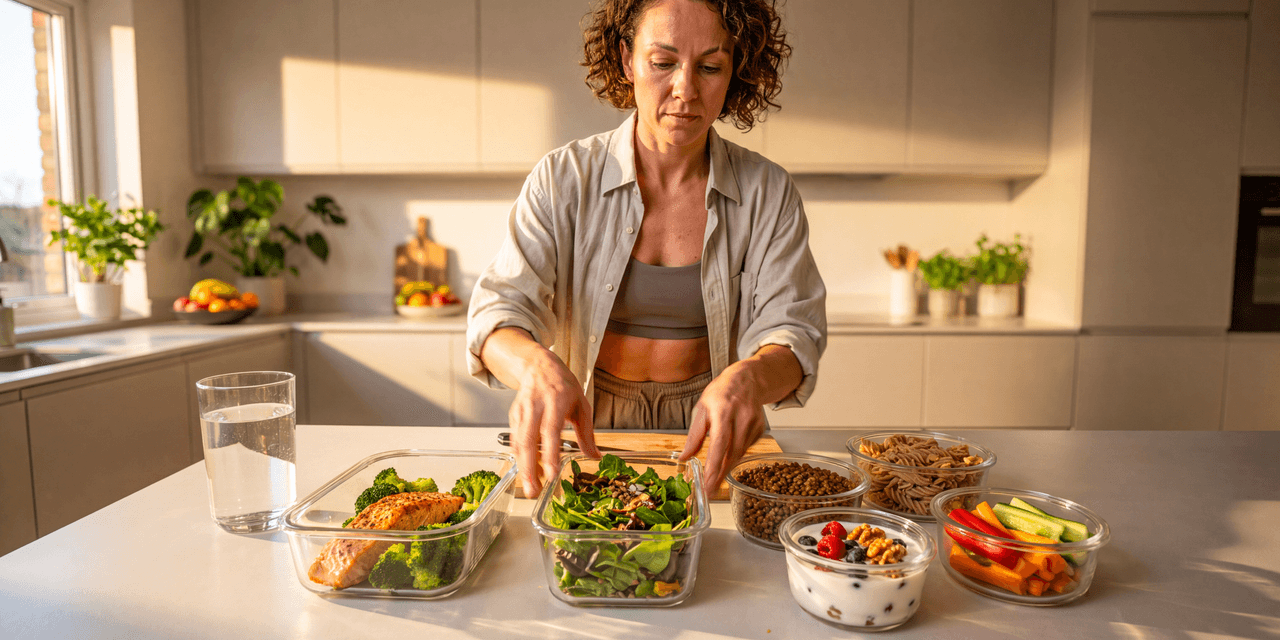
When you’re running on very little sleep, planning meals and making lots of decisions can feel like more effort than usual. I always recommend making things easier for your future self where you can. Having a few simple meals and snacks ready to go means you’re less reliant on energy and motivation when you’re already tired. Here are some tips:
- Batch cook on a good day. Soups, stews, curries and chilli freeze brilliantly and mean you've got a meal ready when you're shattered.
- Keep your freezer stocked with frozen veg, fish, berries, wholegrain rice and wraps.
- Prep snacks in advance. Boil a few eggs, portion out nuts or chop vegetables at the start of the week.
- Keep a short list of go-to meals on your phone. Decision fatigue is real when you're tired!
- Set out breakfast the night before. Overnight oats or chia pots take two minutes to prepare the night before but can give you an extra 30 minutes of sleep the next morning.
What else helps on tired days?
Food can help you feel more supported after a poor night’s sleep, but I’d also look at the rest of your day. Simple habits can help you look after yourself without placing extra demands on your energy:
- Get outside in daylight. Even a 10-minute walk in the morning helps regulate your body clock.
- Drink enough water. Dehydration can add to tiredness and headaches.
- Move gently. A short walk or some stretching can boost your energy more than another coffee
- Be kind to yourself. However sluggish you feel the next day, one bad night doesn't undo your progress.
What does a simple day of eating after a rough night look like?
After a difficult night, I’d keep meals simple rather than putting pressure on yourself to eat ‘perfectly’. Aim for easy, satisfying foods that give you a mixture of protein, carbohydrates, fibre, and fruit or vegetables throughout the day. Here’s one example of what that might look like:
- Breakfast: Scrambled eggs on seeded toast
- Snack: Greek yoghurt with berries
- Lunch: Tinned soup with added beans, plus a slice of wholegrain bread
- Snack: An apple with peanut butter
- Dinner: Omelette with frozen vegetables, a jacket potato, and a side salad
Questions to ask yourself on a tired day
When you’re tired, it can be harder to tell whether you need food, rest, water or simply a break. Before automatically reaching for something to give you a quick boost, I’d suggest pausing for a moment and checking in with yourself.
These questions can help you work out what your body might actually need:
- Have I eaten something with protein yet today?
- When did I last have a proper meal or snack?
- Have I had too much caffeine, and is it after 2pm?
- Am I hungry, or am I just tired?
- Do I have an easy meal ready for tonight?
- Have I had enough water?
Asking yourself these questions can help you make a choice that feels right for where you are today, without the pressure of getting it perfect.
When should you seek advice?
If poor sleep goes on for weeks, it's worth speaking to your GP. There are effective treatments for sleep problems, including cognitive behavioural therapy for insomnia (CBT-I). If menopause symptoms like night sweats are the cause, your GP can talk you through your options, including HRT. You don't have to put up with it.
The takeaway
When sleep is poor, aim for regular meals, a protein-rich breakfast, simple snacks and an earlier cut-off for caffeine. Keep things easy, plan ahead where you can and don't aim for perfect. Eating well on a tired day is simply about making the next meal a good one.
About Lisa Marley
Lisa is a RSPH-accredited Chef and Wellness Expert with an AfN Certified Diploma in Nutrition Coaching. Working alongside myBMI, she helps translate nutrition science into practical, everyday advice, creating recipes, meal ideas and healthy eating guidance that support sustainable weight loss and long-term wellbeing.
Find out more about her work here.
Sources
- Insomnia: signs, symptoms and treatment (2025) HSE. [Accessed 13 October 2026]
- Menopause overview (2025) HSE. [Accessed 13 October 2026]
- Sleep problems - tips and self-help (2025) HSE. [Accessed 13 October 2025]
- Cognitive Behavioral Therapy for Insomnia (CBT-I): How It Works (2026) Sleep Foundation. [Accessed 13 October 2026]


-4.png&w=3840&q=75)