Mounjaro side effects and how to treat them
Written by:

28 Oct 2026 • 28 min read
Reviewed and fact-checked:

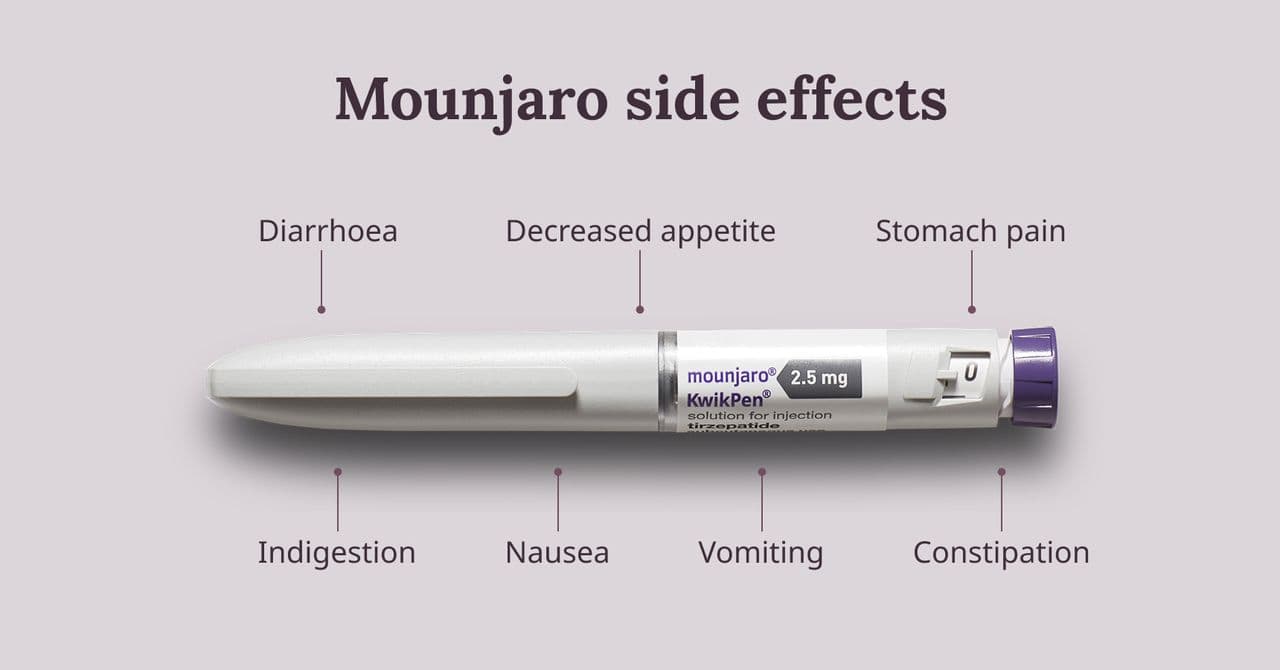
Like any medication, Mounjaro can cause side effects, but most people find they are mild, manageable, and settle as the body adjusts. Knowing what to expect puts you in control and helps you feel more confident as you get started.
In this guide, you'll learn all you need to know about the most common Mounjaro side effects, how often they happen, how long they typically last, simple ways to manage them, and when to reach out for clinical support.
Key points
- Most Mounjaro side effects are linked to your digestive system. They are usually mild, short lived, and improve as your body gets used to the medication, often without the need for treatment.
- Many side effects can be eased with simple diet and lifestyle adjustments, like eating smaller meals, staying hydrated, moving more, and avoiding rich or fatty foods.
- Side effects are more common when you are first starting treatment or moving up to a higher dose. This is a normal part of your body adjusting, and they typically settle quickly.
What are the most common side effects of Mounjaro?
Mounjaro side effects can vary from person to person. Most are digestive and happen because the medication slows how quickly your stomach empties, helping you feel fuller for longer. While this is part of how the treatment supports weight loss, it can take a little time for your body to get used to it.
Fortunately, side effects are typically mild, temporary, and very manageable. They are most common when starting treatment or increasing your dose.
According to the patient leaflet, the very common side effects (affecting more than 1 in 10 people) of Mounjaro are:
- nausea and vomiting
- diarrhoea
- stomach pain
- constipation
- reduced appetite
- fatigue
- low blood sugar
Additionally, the following are listed as common side effects, affecting up to 1 in 10 people:
- dizziness
- low blood pressure
- indigestion
- bloating, burping, and gas
- acid reflux (heartburn)
- hair loss
- injection-site reaction (eg: itching or redness)
- fast pulse
These side effects are usually short-lived and tend to resolve on their own without treatment as your body adjusts to the medication or new dose.
“While some side effects are considered common, not everyone gets them, and for most people they are mild and settle gradually. Simple lifestyle changes, like eating balanced meals, staying well hydrated, and building gentle movement into your week, can make a real difference in how you feel. We guide you through all of this so you are never left figuring it out on your own. And if something feels uncomfortable or harder than expected, please do not just push through it. Reach out to us. Whether you need reassurance, practical advice, or a little extra support, our clinical team is here to help."
Ayesha BashirPrescribing Pharmacist
Dealing with Mounjaro nausea
Nausea is one of the most common side effects of Mounjaro, and while it can be uncomfortable, it’s often manageable. Small changes to your diet and everyday habits, as well as certain medication, may help ease it.
Diet and lifestyle changes
When you’re feeling nauseous, small adjustments may help you feel more comfortable while your body gets used to Mounjaro. There’s no need to change everything at once. Focus on what feels doable for you.
Eat blandly and avoid trigger foods
When you’re feeling sick, plain, simple foods can be easier to stomach. You may want to avoid foods that are more likely to make nausea feel worse, such as:
- spicy foods, like curries and chilli
- fried or greasy foods, like crisps, chips, and takeaways
- foods with strong smells, including anything that feels unpleasant while cooking
It may also help to cut back on rich desserts, sauces, and dressings, as well as highly processed or canned cooked foods like pre-made soups or stews. Instead, try simple options such as crackers or apple, and see what feels manageable for you.
For more information on helpful eating habits and foods to prioritise or avoid, take a look at our guide to what to eat when you’re taking Mounjaro.
Step outside for some fresh air
Sometimes, a change of environment can help when you’re feeling nauseous. Try opening a window or stepping outside for a few minutes. Cooler, fresher air may feel more comfortable.
Avoid strong scents
Strong smells can make nausea feel worse, especially when you’re already feeling sensitive or unwell. If you can, move away from triggers such as cooking smells, perfume or strongly scented products, and keep your space well ventilated.
Wear loose clothing
When you’re already feeling sick, tight waistbands can add to the discomfort. Try wearing loose, comfortable clothing that doesn’t put pressure on your stomach while your nausea settles.
Medication
If nausea persists despite lifestyle adjustments, certain medication might help.
- Antacids: Treatments like Gaviscon and Rennie may help relieve indigestion and heartburn, which can come with feeling sick. The HSE advises taking them with or soon after meals, and before bed, as well as not taking other medicines within 2-4 hours of an antacid.
- Anti-sickness medicine: If you do not feel better in a few days, or your nausea keeps coming back, a doctor may prescribe anti-sickness medicine, like prochlorperazine, which is a prescription-only medication in the form of tablets.
- Oral rehydration sachets: Vomiting can lead to fluid loss. These powders mixed with water help replace the sugar, salts, and minerals your body has lost.
Always speak to a pharmacist or clinician before taking a new medicine alongside Mounjaro. If your nausea is getting worse, isn’t improving, or you’re finding it difficult to manage, reach out for clinical support.
And if you’re a myBMI patient, you don’t have to manage nausea on your own. Our clinical team can offer practical advice and assess whether you require side effects medication which, if deemed clinically appropriate, will be included in the total cost of your treatment plan should you request it, provided by our partner pharmacy
Dealing with Mounjaro indigestion and acid reflux
As Mounjaro slows stomach emptying, some people notice increased pressure in the stomach. This can lead to bloating, extra gas, burping, or acid reflux, where stomach acid moves back up and causes heartburn. While these can feel frustrating, there are ways you can improve them.
Below is an overview of simple lifestyle changes and medication that may help. If need more detailed advice, take a look at our guide to managing acid reflux and heartburn with Mounjaro.
Diet and lifestyle changes
You don’t need to change everything at once. Start with the habits that feel manageable and pay attention to what makes your symptoms better or worse.
Eat smaller, more frequent meals
Large meals can make reflux symptoms worse, so try eating smaller portions more regularly instead. Eating slowly and deliberately may also help. HSE guidance recommends smaller, more frequent meals for managing heartburn and acid reflux.
Include high-fibre and alkaline foods
Fibre-rich foods, such as wholegrains, fruit and vegetables, can help, while lower-acid foods, such as bananas, melon, and green vegetables, may feel gentler. What triggers reflux can vary from person to person, so pay attention to what works for you rather than cutting out foods unnecessarily.
Sit upright after eating
Give your stomach some time to settle before you lie down. Avoid lying down or bending over straight afterwards. It’s recommended to leave 3-4 hours between your evening meal and going to bed where possible to reduce acid reflux.
If you smoke, consider stopping
Smoking can contribute to acid reflux by relaxing the muscle at the bottom of your food pipe that normally helps stop stomach acid travelling back upwards. Quitting can therefore help reduce reflux as well as bringing wider health benefits
Find ways to manage stress
Stress and anxiety can make heartburn and acid reflux worse for some people. You don’t need a complicated routine. Try something that genuinely helps you unwind, whether that’s going for a walk at lunch or after work, taking some quiet time in the morning or doing something calming and meditative like arts and crafts in the evenings.
Medication
Medicines can also help manage indigestion and acid reflux. The right option will depend on your symptoms, so speak to a pharmacist or clinician before starting something new alongside Mounjaro.
- Omeprazole: This reduces the amount of acid your stomach produces and is used to treat symptoms and conditions including heartburn and acid reflux. Some types are available from pharmacies and shops, while others require a prescription.
- Lansoprazole: Like omeprazole, lansoprazole reduces stomach acid and is used to treat heartburn and acid reflux. It is available on prescription.
- Gaviscon: This is another option used to manage reflux symptoms. A pharmacist can advise whether it’s suitable for you and how to take it alongside your other medicines.
Always speak to a pharmacist or clinician before taking a new medicine alongside Mounjaro. If your indigestion or reflux is getting worse, isn’t improving or is becoming difficult to manage, reach out for clinical support.
And if you’re a myBMI patient, you don’t have to manage indigestion and acid reflux alone. Our clinical team can offer practical advice and assess whether you require side effects medication which, if deemed clinically appropriate, will be included in the total cost of your treatment plan, provided by our partner pharmacy.
Dealing with Mounjaro diarrhoea
Diarrhoea is one of the more disruptive side effects of Mounjaro, but, like all other very common side effects, there are certain things you can do to manage it better.
Here’s a quick overview of what may help. For more detailed advice on how to prevent or actively manage it, read our guide to dealing with diarrhoea on Mounjaro.
Diet and lifestyle changes
Small changes to what and how you eat and drink can make things easier while you have diarrhoea.
Stay hydrated
Diarrhoea causes you to lose more fluid than usual, so it’s important to replace it. Try drinking water regularly throughout the day, taking small sips if you’re also feeling sick. Rehydration solutions from a pharmacy can also help replace lost fluids and salts.
Choose foods that are easy to digest
If your stomach feels unsettled, keep things simple. Soft, easily digested foods such as plain white meats and mashed potato may be easier to manage. You can gradually return to your usual balanced diet as your symptoms improve.
Eat smaller, more frequent meals
You might not feel like eating your usual portions when you have diarrhoea, and that’s okay. Try smaller meals and snacks throughout the day, eat slowly and see what feels good for you.
Be mindful of fibre while symptoms settle
Fibre is an important part of a balanced diet, but some high-fibre foods can irritate your gut while you have diarrhoea. Temporarily choosing lower-fibre options such as white bread, white rice or white pasta may be easier to tolerate. Once your diarrhoea settles, you can gradually re-introduce more fibre into your diet.
Medications
Loperamide is one of the most accessible medications used to treat diarrhoea. Often known by the brand name Imodium, loperamide is available to buy from pharmacies and shops, and some types are available on prescription.
As always, speak to a pharmacist or clinician before taking a new medicine alongside Mounjaro. They can advise whether it’s suitable for you and how to take it safely.
And if you’re a myBMI patient, you don’t have to bear through diarrhoea alone. Our clinical team can offer practical advice and decide whether medication may be appropriate. If it is, then it will be included into the total cost of your treatment plan, provided by our partner pharmacy.
Dealing with Mounjaro dizziness and low blood sugar (hypoglycaemia)
Dizziness can have different causes, so it’s important not to assume that Mounjaro is always responsible. Dehydration, an onset migraine, and low blood sugar are among the possible causes of dizziness.
Here are some quick tips that might help. For more detailed advice on how to prevent or manage it, read our guide to dealing with dizziness on Mounjaro.
Diet and lifestyle changes
Because dizziness can have different causes, there isn’t one lifestyle change that will work for everyone. Pay attention to your symptoms and any patterns you notice, as this can help you work out what may be contributing to your dizziness and how best to manage it.
Try the 15-15 rule for low blood sugar
If you monitor your blood sugar and it falls below 4 mmol/L, you’ll need to bring it back up quickly.
In this case, the rule of 15 (also known as the 15-15 rule) may help. It refers to a method of raising blood sugar by consuming 15g of fast-acting carbohydrates (like a tablespoon of honey, juice, soda, or glucose tablets) and rechecking your blood sugar levels after 15 minutes. If your sugar blood sugar is still low, repeat until reaching an adequate level of 4 mmol/L or above.
Stay hydrated
Drinking enough water is one of the easiest things to forget on busy days. But it can leave you feeling dizzy or lightheaded. Try to drink regularly to prevent dizzy spells. This is particularly important if you're also dealing with diarrhoea or vomiting which, as discussed, can cause fluid loss.
Pay attention to migraine symptoms
Migraine can also cause dizziness, and you may feel dizzy before, during or after a migraine attack. If you experience migraines, it can help to understand your own patterns rather than cutting out lots of potential triggers unnecessarily. The Migraine Trust notes that triggers vary between people and that they can sometimes be early warning signs of an attack.
Consider your salt intake
Both too much and too little salt can affect your health, but changing your salt intake isn’t a simple fix for dizziness. If your dizziness keeps coming back or isn’t improving, speak to your clinician rather than significantly increasing or reducing how much salt you eat on your own. They can help work out what’s causing your symptoms and recommend the right support.
Medications
Lifestyle changes should be your first step when managing dizziness. If it doesn’t improve, keeps coming back or is difficult to manage, speak to a pharmacist or clinician before trying any medication. Dizziness can have different causes, and the right treatment will depend on what’s behind yours. Please see a GP if symptoms don’t resolve with lifestyle changes.
Dealing with Mounjaro constipation
Constipation is one of the most pervasive side effects of Mounjaro. Because Mounjaro slows digestion, this reduced movement allows your body to absorb more water from the stool as it passes through the gut, making it harder and more difficult to pass. This can leave you feeling uncomfortably full and bloated.
Luckily, small tweaks to your diet and routine can help, and medication may also be an option if lifestyle changes aren’t enough.
Diet and lifestyle changes
A few simple changes can help keep your bowel moving more regularly.
Gradually increase dietary fibre
Fibre can help with constipation by adding bulk to your poo, which helps it better move through your bowel. Try gradually adding more fibre-rich foods to your diet rather than making a big change overnight, as this can also upset your stomach.
For more practical ideas, read our guide to low-calorie, high-fibre foods for Mounjaro constipation.
Add bulking agents
The HSE recommends adding bulking agents such as wheat bran to your diet to increase your fibre intake.
If dietary changes aren’t enough, bulk-forming laxatives like Fybogel (ispaghula husk) are another option the HSE lists. These increase the bulk or weight of your stool, which stimulates your bowel, and usually take 2 to 3 days to work. It is important to drink plenty of water with this medication to ensure it works effectively.
Stay hydrated
As usual, make sure you’re drinking plenty of fluids, especially as you increase your fibre intake. Increasing fibre without plenty of water can make constipation worse. As fibre ads bulk to the stool, your body needs enough liquid to help it pass easily.
Medication
Laxatives can be used to treat constipation. Different types work in different ways, so it’s worth speaking to a pharmacist or clinician about which option is right for you. The HSE lists the following options:
- Osmotic laxatives: These draw water into your bowel, helping to soften your poo and make it easier to pass. Examples include lactulose (Duphalac or Laxose) and macrogol (including Movicol, Laxido, Molaxole and Macrolief). They typically take 2 to 3 days to work.
- Stimulant laxatives: These encourage the muscles in your gut to move poo through your bowel. Examples include bisacodyl (Dulcolax), senna (Senokot) and sodium picosulfate. They generally take 6 to 12 hours to work.
- Stool-softener laxatives: These increase the amount of water in your stool, making it softer and easier to pass. Examples include docusate sodium.
Speak to a pharmacist or clinician before taking a new medicine alongside Mounjaro. They can help you choose an option that’s suitable for you and advise you on how to take it safely.
And if you’re a myBMI patient, you don’t have to manage constipation alone. Our clinical team can offer practical advice and decide whether medication may be appropriate. If it is, it will be included as part of your treatment plan at no extra cost, provided by our partner pharmacy.
Reduced appetite from Mounjaro
One of the ways Mounjaro supports weight loss is by helping you feel fuller and reducing how much you want to eat.
But having very little appetite can come with its own challenges. You might struggle to eat enough to support steady energy levels throughout the day, which can leave you feeling tired or make staying active harder. Eating can also be an important part of everyday life, from meals with family to social occasions, so losing interest in food can be frustrating.
Here are some ways you can go about it. For more practical advice, our partner nutritionist has written a guide to how to eat when your appetite is low.
Diet and lifestyle changes
A few simple adjustments to when and how you eat can make getting the nutrition you need feel more manageable.
Eat little and often
If a full meal feels overwhelming, try smaller meals and snacks spread throughout the day. Eating little and often can make it easier to get the nutrition you need without having to tackle a large portion in one go. The Irish Nutrition and Dietetic Institute recommends this approach for people with a small appetite.
Separate drinks from food
Drinking just before or with a meal can fill you up, leaving less room for food. Try having your drinks between meals or after you’ve eaten instead, while still making sure you stay well hydrated throughout the day
Use smaller plates
When your appetite is low, seeing a large portion in front of you can feel like a lot to manage. Serving your food on a smaller plate can make meals feel more approachable, and you can always go back for more if you’re still hungry.
Choose foods you enjoy
When you don’t feel particularly hungry, eating something you genuinely enjoy can make mealtimes easier. Choose favourite foods while aiming for enough protein and other nutrients across your diet.
If your reduced appetite is making it difficult to eat enough, is leaving you feeling weak or tired, or you’re concerned about your nutrition, speak to your clinical team for more advice.
Are there any less common side effects of Mounjaro?
Alongside the very common digestive side effects, you may notice other changes while taking Mounjaro, including:
- a faster heart rate
- sulphur burps
- hair loss
- reactions around your injection site
If something doesn’t feel right or a side effect is becoming persistent or difficult to manage, speak to your myBMI clinical team for advice.
Increased heart rate from Mounjaro
Mounjaro can cause a small increase in heart rate for some people. It may affect up to 1 in 10 people, according to the patient leaflet. Clinical trials found that most increases were small, although larger ones were seen in a few people and were more common at higher doses.
If a higher heart rate interferes with your day-to-day life, cutting back on caffeine and alcohol, while keeping hydrated throughout the day might help. Stress can also be a contributing factor, so finding ways to unwind, however small, may be beneficial in the long run. If the increase persists, please stop the treatment and get in touch with our clinicians for advice on next steps.
Sulphur burps
Sulphur burps have a distinctive rotten-egg smell caused by hydrogen sulphide, a gas that can be produced by bacteria in your digestive system.
As discussed, Mounjaro slows how quickly food leaves your stomach. While this may contribute to burping and other digestive symptoms, it isn’t clear why some people specifically experience sulphur-smelling burps.
So, what you eat may play a part, rather than the medication itself. You don’t need to cut out foods unnecessarily. Instead, pay attention to whether particular meals seem to trigger your symptoms.
For more practical advice, read our guide to sulphur burps on Mounjaro.
Hair loss
Up to 1 in 10 people experience hair loss while taking Mounjaro. One possible explanation is telogen effluvium, a type of temporary hair shedding that can happen after significant changes to your body, including weight loss.
If you notice increased shedding, focus on supporting your overall nutrition while you lose weight. Eat enough protein to support healthy hair, and aim for a varied, balanced diet so you’re getting the vitamins and minerals your body needs. Avoid overly restrictive diets, particularly if your reduced appetite is making it difficult to eat enough.
Speak to your clinical team if hair loss is significant, persistent or worrying you. They can help explore what may be contributing to it.
How to prevent injection-site infections
Reactions around the injection site can happen with Mounjaro. You may notice symptoms such as redness, itching, swelling or discomfort where you’ve injected.
A few simple habits can help you look after your skin and use your pen safely:
- Use a new needle for every injection and dispose of it safely afterwards.
- Rotate where you inject each week, choosing between the recommended areas such as the abdomen, thigh, or upper arm rather than repeatedly injecting into the exact same spot.
- Avoid injecting into skin that feels sore, irritated or damaged.
- Follow the instructions provided with your Mounjaro pen each time you inject.
When to seek urgent medical help
Severe allergic reactions are very rare, but it is important to recognise the signs. Seek urgent medical attention immediately if you notice:
- swelling of the face, lips, tongue, or throat
- difficulty swallowing
- trouble breathing
If you are ever unsure about a reaction, it is always best to get advice. Our clinicians are here to support you and make sure you feel confident and safe throughout your treatment journey.
Severe and serious Mounjaro side effects
In some rare cases, people can experience severe Mounjaro side effects, including:
Severe stomach pain
This is sharp stomach pain that is more than just discomfort and isn’t momentary but prolonged. It may be a sign of acute pancreatitis and needs immediate medical attention.
Acute pancreatitis
Acute pancreatitis may affect 1 in 100 people and is a medical emergency which can be life-threatening. Symptoms include:
sharp, severe stomach pain that doesn’t go away or may move to the back
- nausea
- vomiting
- fever
- fast heartbeat
Call 999 or go to A&E immediately if you notice these signs.
You’re at greater risk of pancreatitis if you:
- have obesity
- are over 70
- are a smoker
- have two or more alcoholic drinks a day
- have a family history of the condition
Gallbladder problems
Gallbladder problems are an uncommon but serious side effect reported with Mounjaro which may be linked to rapid weight loss during treatment. Warning signs of gallbladder problems include:
- sharp pain in the upper right abdomen (that may move to the back or shoulder)
- fever
- chills
- digestive issues
- yellowed skin/whites of eyes (in severe cases)
Call 999 or go to A&E immediately if you notice these signs.
Acute kidney injury
Acute kidney injury is when the kidneys very suddenly stop functioning and can’t filter out waste like they usually do.
Acute kidney injury symptoms to watch out for include:
- dehydration symptoms (confusion, thirst, trouble concentrating, dry mouth and lips)
- diarrhoea
- drowsiness
- fatigue
- nausea
- vomiting
- urinating less than normal
Call 999 or go to A&E immediately if you notice these signs.
You’re more likely to have acute kidney injury if you:
- are 65 or over
- have a family history of kidney disease
- have an autoimmune condition
- don’t drink enough water and are at risk of dehydration
- take other medications that impact kidney function
Allergic reactions
In rare cases, some people can have an allergic reaction to Mounjaro.
Symptoms of an allergic reaction include:
- fever
- rash
- chills
If you think you’re having an allergic reaction to Mounjaro, talk to your healthcare provider.
In very rare cases, some people may have a severe allergic reaction to Mounjaro.
Severe allergic reaction symptoms include:
- trouble breathing
- rapid swelling of the throat, mouth, tongue, or face
- widespread rash
- dizziness
- loss of consciousness
- nausea
- vomiting
- stomach cramps
If you think you’re having a severe allergic reaction to Mounjaro, call 999 or go to A&E immediately.
Thyroid-related side effects
Thyroid related side effects have been reported in clinical studies, but they are considered very rare. For the vast majority of people, this is not something that will affect their treatment or day to day life.
Mounjaro is generally not recommended for anyone with a personal or family history of certain thyroid cancers, which is why these checks are an important step in keeping your treatment safe.
Being aware of rare risks is about helping you stay informed, not alarmed. If you do not have a relevant medical history, this is not something you need to worry about. And if you ever have questions or want reassurance, your prescriber is always there to guide you and make sure you feel confident in your treatment plan.
Eye-related side effects
Diabetic retinopathy is an eye condition linked to diabetes and is caused by changes in blood sugar levels over time. When blood sugar changes quickly, it can temporarily affect the shape of the eye’s lens, which may lead to blurred or altered vision.
In some cases, people who already had diabetic retinopathy noticed a worsening of symptoms while using Mounjaro. This is uncommon, and it mainly applies to those with existing diabetes related eye conditions rather than people without a history of them.
Staying on top of regular diabetes reviews and eye checks is one of the best ways to protect your vision and catch any changes early.
What should I do if I experience some of the serious side effects?
Speak to a healthcare professional promptly if you notice:
- blurry vision
- dark spots in your field of vision
- floaters
- sudden loss of vision
- flashing lights
- changes in how you see colour
If you ever experience changes to your eyesight, it is important not to ignore them. Support is always available, and getting advice early helps ensure you receive the right care quickly.
“It's easy to come across information about serious side effects and let your mind jump to the worst-case scenario, but it's important to pause and look at the bigger picture. These side effects are extremely rare, and most people will never experience them. Your safety is always our priority, which is why we take the time to carefully review your medical history and increase your dose gradually, allowing your body to adjust in a controlled and supported way."
Ayesha BashirPrescribing Pharmacist
Do Mounjaro side effects differ by dose?
The side effects linked to Mounjaro are consistent across all dose strengths. This means a specific dose is not responsible for a specific side effect. For example, 5mg would not be the only dose that could cause nausea or digestive symptoms. However, as your dose increases, you may notice side effects you have previously experienced returning.
Higher doses do not introduce unexpected or entirely new side effects. Instead, they can make known ones more noticeable while your body adjusts. This is a normal part of treatment and exactly why dose increases are gradual and clinically guided.
How can myBMI support me with my side effects?
As we’ve covered throughout this guide, side effects can be part of your journey on Mounjaro, but you don’t have to simply put up with them. If something doesn’t feel right, or you’re unsure about what you’re experiencing, reach out to our clinical team.
We’re here to help you understand what’s happening, find ways to manage your symptoms and, where clinically appropriate, provide side effects treatment as part of your myBMI treatment plan at no extra cost, provided by our partner pharmacy.
Side effects summary
Side effect | Frequency* | What it feels like | What may help |
Nausea and vomiting | Very common | • Feeling sick • Being sick • Unsettled stomach | • Eat smaller, more frequent meals • Choose plain, easy-to-digest foods • Avoid rich, greasy or spicy foods • Stay hydrated • Get some fresh air • Avoid strong smells |
Diarrhoea | Very common | • Loose or watery stool • Needing the toilet more often • Stomach cramps | • Drink plenty of fluids • Consider oral rehydration solutions • Eat smaller meals • Lower-fibre, easy-to-digest foods |
Stomach pain | Very common | • Stomach ache or discomfort • Cramping | • Eat smaller meals • Avoid triggering foods |
Constipation | Very common | • Pooing less often • Hard or dry stool • Straining • Feeling bloated or uncomfortably full | • Gradually increase fibre • Drink plenty of fluids • Keep moving regularly • Ask a pharmacist or clinician about laxatives if needed |
Reduced appetite | Very common | • Feeling less hungry • Getting full quickly • Finding normal portions difficult to finish | • Eat little and often • Use smaller plates • Choose nutritious foods • Drink separately from your meal |
Fatigue | Very common | • Feeling tired or low in energy • Finding everyday activity harder • Difficulty exercising | • Eat regularly, even if appetite is low • Stay hydrated • Prioritise rest and sleep |
Low blood sugar (hypoglycaemia) | Very common* | • Dizziness • Sweating • Headache • Faster heartbeat • Feeling shaky or weak | • Try the 15-15 rule • Seek clinical advice if episodes recur |
Gas | Very common | • Bloating • Burping • Passing more wind • Sometimes sulphur-smelling burps | • Eat smaller meals • Eat slowly • Notice which foods trigger symptoms |
Dizziness | Common | • Feeling lightheaded • Feeling unsteady • Spinning sensation or vertigo | • Stay hydrated • Eat regularly • Check blood glucose if appropriate |
Hair loss | Common | • Increased hair shedding • Hair may feel thinner | • Eat enough protein • Aim for a varied, balanced diet • Use gentler hair products |
Indigestion and acid reflux | Common | • Heartburn • Burning feeling in the chest • Burping or bloating • Acid or unpleasant taste in the mouth | • Eat smaller meals • Avoid lying down after eating • Leave 3-4 hours between dinner and bed • Notice and limit trigger foods • Ask a pharmacist or clinician about treatment |
Injection-site reaction | Common | • Itching • Redness • Swelling • Soreness or bruising | • Rotate injection sites • Use a new needle every time • Avoid sore or damaged skin • Follow your pen instructions |
Fast pulse | Common | • Heart beating faster than usual • Heart palpitations | • Stay hydrated • Limit caffeine and alcohol • Try to manage stress • Speak to your clinician if persistent or concerning |
Acute pancreatitis | Uncommon | • Severe, persistent stomach pain • Pain may spread to the back • Nausea or vomiting | • Seek urgent medical help • Do not try to manage severe symptoms at home |
Allergic reactions | Rare | • Rash or itching • Swelling • Severe reactions may cause swelling of the face, lips, tongue or throat • Difficulty breathing or swallowing | • Speak to a healthcare professional about suspected allergy symptoms • Call 999 or go to A&E for signs of a severe allergic reaction |
Eye-related side effects | No frequency listed, as it's only relevant to patients with diabetic retinopathy | • Blurred or altered vision • Floaters • Dark spots • Flashing lights • Changes in colour vision | • Keep up with diabetes reviews and eye checks • Report changes in vision to your clinician promptly • Seek urgent assessment for sudden loss of vision |
*Frequency meaning, based on the patient leaflet:
Very common = may affect more than 1 in 10 people
Common = may affect up to 1 in 10 people
Uncommon = may affect up to 1 in 100 people
Rare = may affect up to 1 in 1,000 people
"For many people, losing weight brings improvements to their overall health, energy levels, mobility, and confidence, which are benefits that far outweigh the very small risk of severe reactions. Try not to let worry take away from the positive step you are taking for your health. And remember, you are not doing this alone. If you ever have concerns or simply need guidance, we are right here beside you."
Ayesha BashirPrescribing Pharmacist
Sources
- Mounjaro 2.5 mg solution for injection in pre-filled pen. () yourmedicines.ie. [Accessed 20 October 2026]
- Antacids. (2024) HSE. [Accessed 20 October 2026]
- Heartburn and acid reflux: symptoms, causes, prevention and treatments. (2024) HSE. [Accessed 20 October 2026]
- Omeprazole: medicine to treat heartburn and indigestion. (2024) HSE. [Accessed 20 October 2026]
- Lansoprazole: medicine to lower stomach acid. (2024) HSE. [Accessed 20 October 2026]
- Indigestion: symptoms, causes, prevention and treatments. (2024) HSE. [Accessed 20 October 2026]
- Irritable bowel syndrome. (2021) HSE. [Accessed 20 October 2026]
- Hypoglycaemia - type 1 diabetes. (2023) HSE. [Accessed 20 October 2026]
- Dizziness: causes and treatments. (2024) HSE. [Accessed 20 October 2026]
- What is the rule of 15 and how does it treat hypoglycemia? (2023) Medical News Today. [Accessed 20 October 2026]
- Migraine attack triggers. (2025) The Migraine Trust. [Accessed 20 October 2026]
- Can Salt Cause Dizziness? How High and Low Salt Affects You. (2026) Biology Insights. [Accessed 20 October 2026]
- Laxatives: medicine to treat constipation. (2024) HSE. [Accessed 20 October 2026]
- Advice for People with Poor Appetite / Weight Loss. (2011) Irish Nutrition and Dietetic Institute. [Accessed 20 October 2026]
- What Stinks? The Role of Hydrogen Sulfide in the Gut. (2023) ASM.org. [Accessed 20 October 2026]
- Telogen Effluvium (Hair Loss): Causes and Treatment. (2024) Patient.info. [Accessed 20 October 2026]
- Gallstones - Complications. (2025) HSE. [Accessed 20 October 2026]
- Mounjaro 2.5 mg solution for injection in pre-filled pen. (2026) medicines.ie. [Accessed 20 October 2026]
- Mounjaro: Highlights of Prescribing Information. (2026) Eli Lilly. [Accessed 20 October 2026]
- Diabetic retinopathy overview. (2024) HSE. [Accessed 20 October 2026]